
IMPERIAL NEWS NETWORK
Life in Icikgua Finds Its Uneasy Rhythm
How an industrial city carries on amid ration convoys, Guard patrols, and a crisis that refuses to settle.
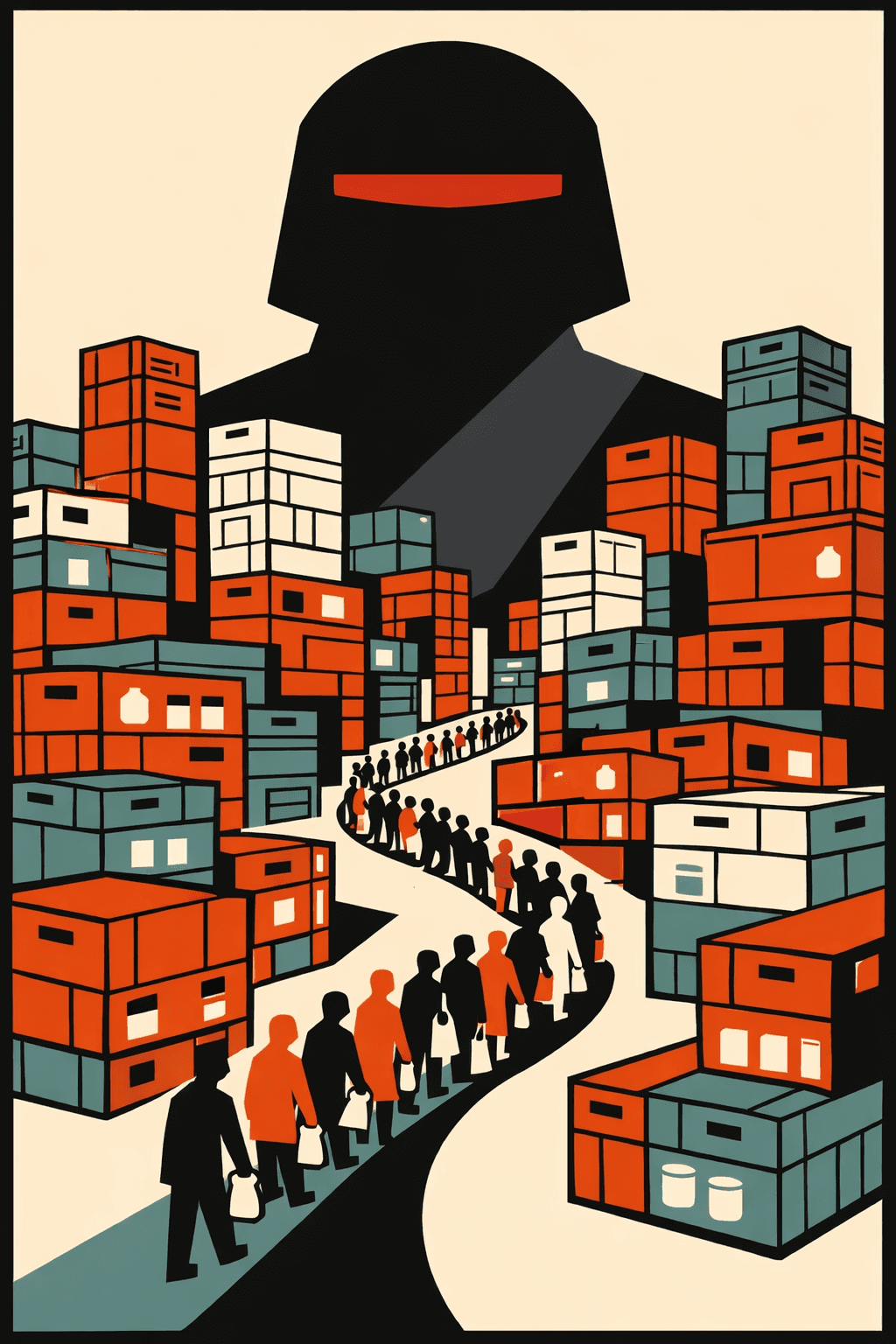
The morning lines begin before sunrise now. Outside a converted tram depot in Icikgua’s southern district, citizens gather with ration bags and datapads, waiting for the day’s convoy from Ullitzae to arrive. By the time the transports rumble in under Guard escort, the line has already curled twice around the block. No one speaks loudly. The city has learned, over the past ten days, that quiet is safer.
The destruction of the Anavniu Memorial Children's Hospital still hangs over Waizjuny. In Icikgua--a city that once prided itself on being the county’s most orderly industrial hub--the grief has settled into daily routine. People still argue about what happened, and who is responsible, but they do it in lowered voices at kitchen tables, in workshop bays, and in the long queues where food is handed out.
Work continues. The factories still open in the mornings, cargo still moves along the canal, and the city’s transit platforms fill and empty as they always have. What has changed is the mood. Conversations stop when patrols pass. People watch the news more closely. Every delay in a supply convoy becomes a topic of speculation.
The Achty'ai Guard maintains a visible presence across the city. Patrols move through the transit corridors in pairs, sometimes threes, their armor unmistakable against the faded duracrete and neon signage. In the first days after the bombing, protests surged through several districts, filling plazas and boulevards with angry crowds. Those demonstrations have since subsided, though no one in Icikgua would claim the anger has faded.
Residents describe the situation less as calm than as pressure held in place. A machinist in the dockyards put it simply: “Nobody forgot. People just learned where the lines are.”
Food distribution has become the most visible feature of daily life. Convoys arriving from Ullitzae--escorted by Guard transports and sometimes Imperial vehicles--enter the city throughout the day. At aid stations across Icikgua, volunteers and troopers unload crates of ration packs, produce, and shelf goods. The process is efficient. Troopers keep the lines moving while officers stand nearby observing both the crowd and their own personnel.
Several residents have noticed the same thing: the officers seem to be watching the troopers almost as carefully as the citizens. In a city where rumors about the Guard have circulated freely in recent weeks, discipline inside the ranks has become something the command structure appears eager to demonstrate.
The lines themselves have turned into informal meeting places. People trade information about which stations still have fresh produce, which convoys arrived late, and which streets have heavier patrols that day. Conversations drift easily between logistics and politics. One minute someone is discussing cooking oil prices, the next they are arguing about the Crown’s investigation into House Achty'ai.
That investigation, announced shortly after the hospital bombing, continues at the deliberate pace familiar to anyone who has dealt with large institutions. Official statements from the Crown promise a thorough review of the events in Anavniu and the wider crisis in Waizjuny. In Icikgua the response is mostly patient skepticism. People expect the process to take time.
What it will produce remains uncertain. Some believe the inquiry will ultimately affirm the county leadership. Others think it may expose failures that go well beyond a single tragedy. Most residents say they are simply waiting.
Meanwhile the rhythms of the city continue to adjust. Cafés open later and close earlier. Transit platforms empty sooner at night. In apartment towers overlooking the industrial canal, residents watch the convoy lights move through the streets below and try to guess how much food will reach the district tomorrow.
For the moment Icikgua functions. Aid convoys arrive, the Guard maintains order, and the investigation proceeds somewhere far above the city’s rooftops.
The city carries on with its routines, though everyone understands the situation is unfinished. Icikgua has settled into an uneasy balance between anger and exhaustion. Whether that balance will hold is a question people prefer to leave unspoken.
Gallery